Imagine work that actually lights you up.
The magic of this work - and why the world is ready for you
Picture your day. There's no commute you resent, no clock you're watching, no Sunday-night dread.
Instead, you wake up to a WhatsApp from a woman who trusts you completely - you’re heading over to her house for a coffee and croissant. You drive over with the windows down, the radio on. You spend a couple of hours together - free flowing chat, no time pressure. All this work together lays the foundations so that when the time comes, you get to be the calm, steady presence beside her through one of the most powerful experiences of her life. You know her wishes. You hold the room. You breathe with her when it's hard, and you witness the moment everything changes.
Then there's the after: the message weeks later that says 'I couldn't have done it without you.' The family who will remember your name for the rest of their lives. That's the connection at the heart of this work - and it's why the women who do it will tell you, without hesitation, that it's the most meaningful thing they've ever done.
This isn't a side hustle or a soft option. It's a real, sustainable career, built around your own life rather than the other way round - doing something that genuinely matters, on your own terms.

Why this training, and why now...The story women are told about birth
Long before a woman ever goes into labour, she's been taught what to expect. And most of what she's absorbed - from television, film, news headlines, and the hushed warnings of others - is fear.
Birth as emergency. Birth as something that happens to you. Birth as the thing that goes wrong. Motherhood as something we claw our way through.
By the time many women reach childbearing age, they've been quietly conditioned to distrust their own bodies. That conditioning is not an accident of storytelling - it reflects a wider culture that has long treated women's bodies as problems to be managed rather than processes to be trusted.
A doula's first job is often simply to help a woman unlearn all of it.
The world has never been more ready for you
Something is shifting. More and more women are looking clearly at the state of maternity care — and deciding they deserve more. They're no longer willing to be passed between strangers, dismissed, or left alone in the tender days after birth. They want a trusted presence who knows them. And they are actively seeking her out.
Because the need is real. In 2026, England's maternity services are under the most intense national scrutiny in a generation — a landmark review found that poor care had become normalised, with failures widespread rather than isolated, and reports of traumatic birth rising sharply. National reviews and a dedicated taskforce have followed, but change is painfully slow, and all the while women are asking for better.
Let me be clear where the blame does not sit: with midwives. They're a workforce running on fumes — thousands of vacancies, relentless workloads, burnout among some of the most compassionate professionals in the country. This isn't anti-midwife; it's pro-woman and pro-midwife both. The very thing that helps most — continuity of care, one trusted person who stays — is exactly what an overstretched system can no longer reliably give.
Where the doula stands
Right in that gap. And let's clear something up, because the world loves to reduce this role to a cliché - the woman who hands out flannels and hovers helpfully in the corner. A glorified bodyguard for the birth room. That's not it. Not even close.
The truth is there are layers to this work most people never see. You're the one who knows her hopes and her fears because you took the time to learn them. You're the calm in the room when the energy shifts. You're the voice that helps her understand her choices when she's overwhelmed, the steady presence who stays when every shift changes around her, the person who protects her psychological safety so her body can do what it knows how to do. You're her trusted companion, her advocate, and - by the end - often her friend. You remember she is a whole woman, with a whole life, never just a patient in a bed.
That's why, in a fragmented system, the doula has become the thread of continuity. It's why demand is rising. And it's why the women who train to do this work well — really well — matter more than ever.
There is a place in this work for every kind of doula. The quiet one and the fierce one. The one who leads with science and the one who leads with soul. You don't have to become someone else to do this well. The women who need you are the ones looking for exactly who you already are.
This work lets you live inside your purpose, doula-ing in the way that's truly aligned with you.
Women held with the Becoming Doula approach say this…
-
The kind of support that is priceless - I felt safe in the most challenging moments of labour, held and heard every time my fears caught up with me during pregnancy, and surrounded by the most beautiful loving care. With my first birth I would have said having doula care is a nice extra, but now I know that it is transformative.
— Charlotte
-
When we were faced with conflicting information from doctors and midwives, The expertise and unbiased advice were invaluable. Our doula helped us navigate through the confusion and made sure we understood all aspects of our situation, allowing us to make the best decision for us. Such a compassionate approach and deep knowledge which gave us the clarity we needed during a challenging time.
— Edward
-
Our doula did such an amazing job arming us with the tools we need to achieve the birth we want. She put our actual risks into real context which has allowed us to look very objectively at our options with so much more confidence. We navigated the NHS with a wealth of knowledge and tools for the system that is working against us all!
— Helen
What You’ll Learn
1/8: The doula’s role, philosophy & ethics
What a doula is, and isn't. Where the lines sit, what holding space really means, and how to work with clear boundaries and unshakeable ethics. This is also where you get honest about why you're drawn to this work - because who you are is the instrument you'll be working with.
What it unlocks: you stop wondering whether you're ‘qualified enough’ to do this, and start standing in the role with quiet authority.
The physiology of birth in language you'll actually use: what the body is doing, what it needs to do it well, and why environment changes everything. You'll understand the biomechanics of how a baby moves through the pelvis - and how, and why, that process gets interrupted.
What it unlocks: you'll never feel out of your depth in a birth room again - you'll understand what's happening, and why.
2/8: Pregnancy, birth & the body
3/8: Antenatal support, evidence & rights
How to build trust with a woman antenatally, and how to help her make choices that are genuinely hers. You'll learn what evidence actually is and how to find the credible kind, the birth rights every woman holds, and how to support a partner to be part of it all.
What it unlocks: you become the person who helps a woman feel informed and powerful, instead of frightened and swept along.
4/8: Comfort, presence & the art of holding space
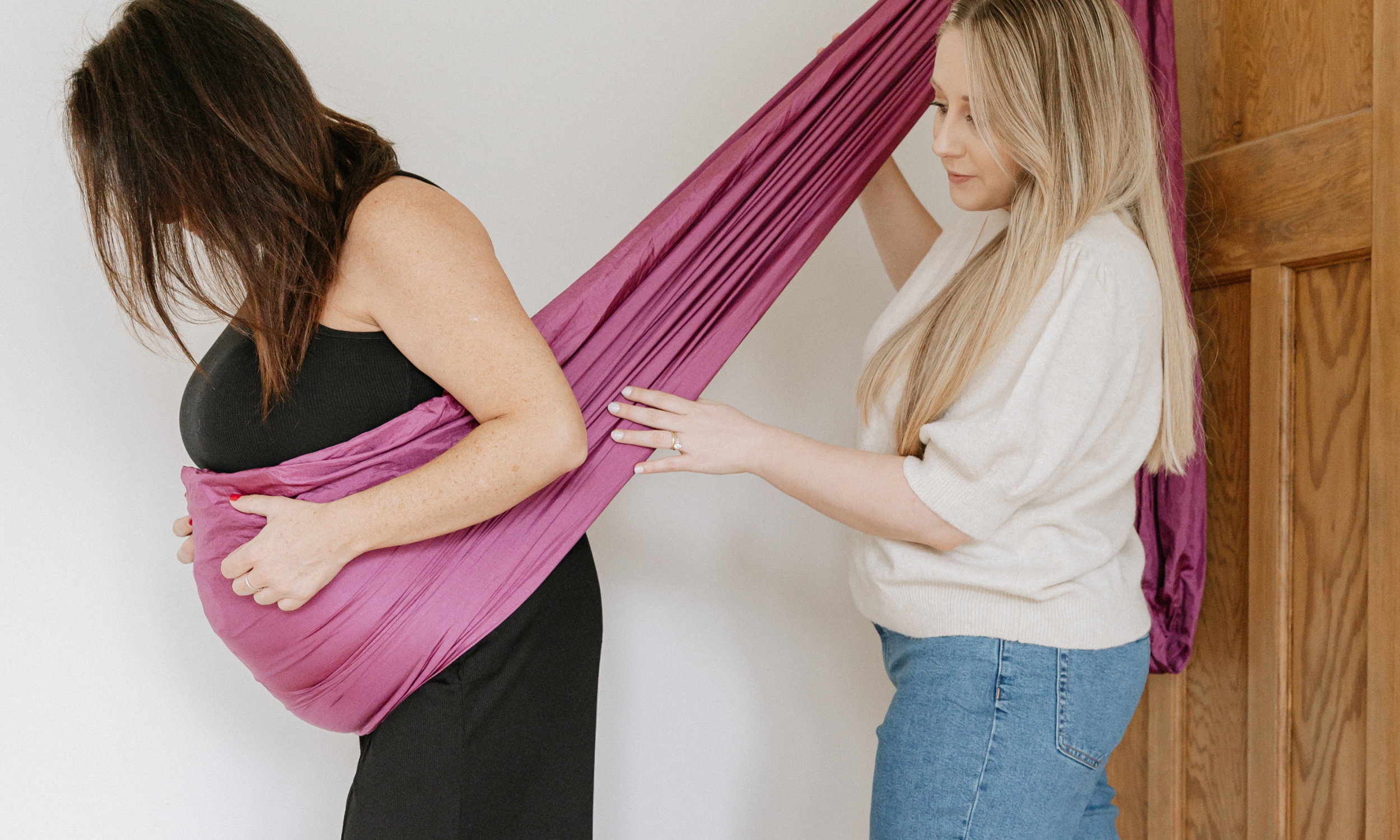
The hands-on craft - positions, movement, counter-pressure, breath - taught in person, because some things can't be learned on a screen.
And the deeper skill beneath it: how to hold a room, stay regulated so you can steady her, and know when to act and when to simply be there.
What it unlocks: the calm, grounded presence that makes families say ‘I don't know what we'd have done without you.’
5/8: Birth setting, interventions & the system
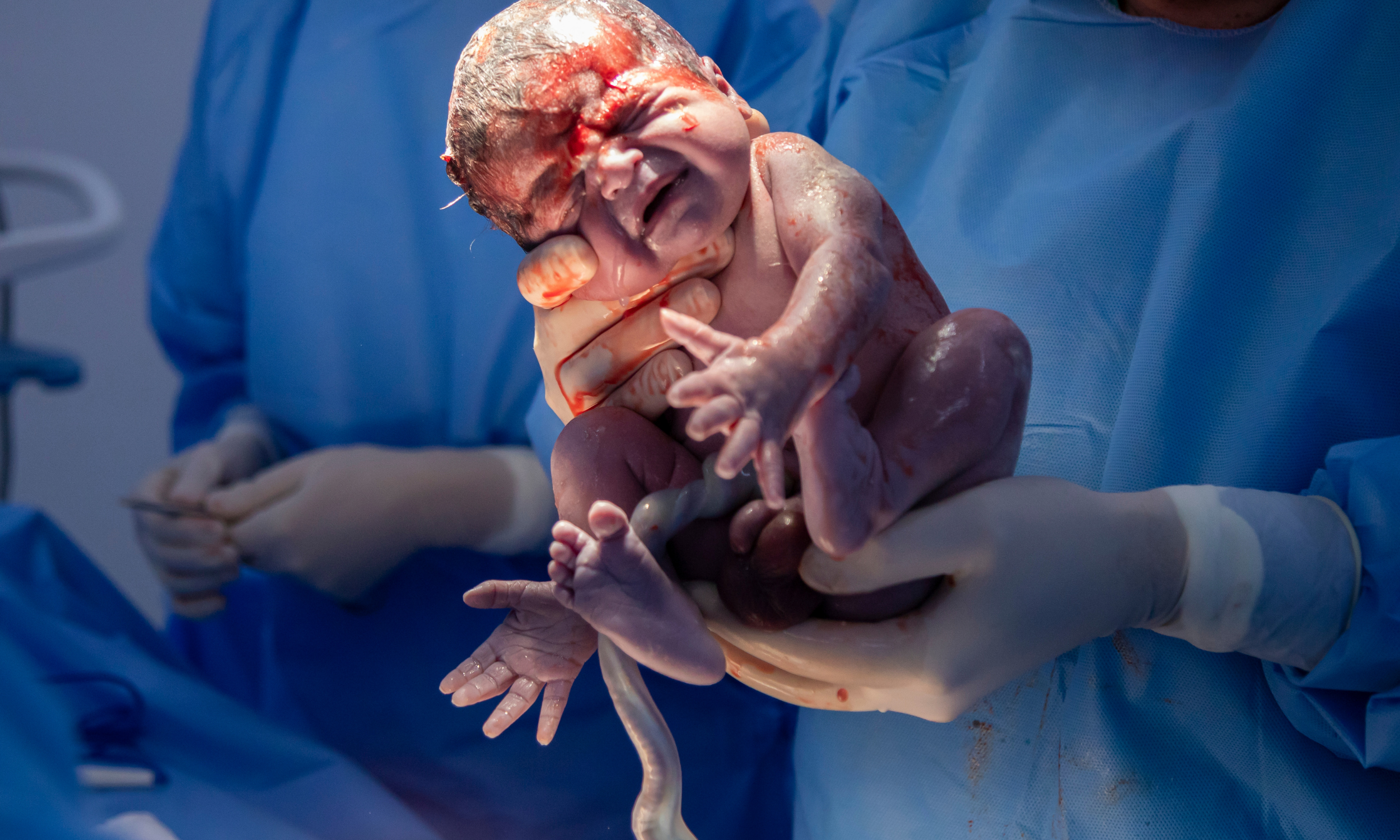
Home, midwife-led unit, hospital - the doula's role in each, and how to work alongside medical teams without friction. You'll learn to read the maternity journey, understand interventions plainly and without fear, and support a woman through an unplanned path with calm.
What it unlocks: you can hold steady in any setting, through any turn a birth takes, without losing your footing.
6/8: The fourth trimester & postnatal support
What postnatal support really looks like day to day: feeding, recovery, and the realities no one warns about. And the deeper work of matrescence - the psychological birth of the mother - holding a woman through the profound identity shift of early motherhood.
What it unlocks: you support the whole woman, not just the birth - the kind of care families remember for life.
7/8: When birth is hard, and safeguarding
Supporting through loss, trauma and grief with care - and protecting your own heart while you do. This is also where you learn inclusive, culturally safe practice, how to recognise when someone needs more support, safeguarding, and how to keep yourself safe as a practitioner. We also explore how to debrief difficult experiences, properly.
What it unlocks: you can stay when it's hard - held together yourself - and know exactly where your limits and your responsibilities lie.

8/8: The business of being a doula
The part most trainings rush, and the reason so many doulas quietly quit. You'll learn to price without apology, define your ideal client, and build a practice shaped around your life rather than one that swallows it. We cover the real mechanics too: running that first client consultation, contracts and insurance, and building genuine relationships across your local perinatal community -midwives, teachers, and the people who'll send women your way. We also explore building a brand, using your voice and how to stand out without dying of cringe.
And we talk honestly about being on call - what it actually asks of you, how to manage it, how to arrange back-up cover and shared care, so the work fits around your life instead of holding it hostage.
What it unlocks: a practice that actually pays you, fits your life, and doesn't burn you out in a year.

What it all adds up toYou don’t learn to doula. You become one.
Anyone can memorise the stages of labour. What this training gives you is harder to find and impossible to fake: the calm that steadies a frightened room, the knowledge that lets you speak with authority, the boundaries that keep you whole, and the business sense that lets you do this for years without breaking.
By the end, you're not someone who has learned about birth. You're the woman a family chooses to have beside them on the most important day of their lives — and who has built a life she loves doing it.

Then: supported practice and mentoring
Becoming a doula is extraordinary work - but the early days can feel daunting.
Your first births. Your first hard conversation. The first time a plan changes and everyone looks to you. This is exactly where 1:1 mentoring changes everything. I'll be alongside you through your first supported births and postnatal clients - someone to debrief with, steady you, and remind you how capable you are - until you're not just a bit more experienced, but genuinely confident.
And the support doesn't have to stop there, there’s longer-term mentoring options available too.
Women coached by Hannah say…
-
She was the obvious choice for career coaching. Working together, I learned how to regulate my nervous system, trust myself, and build the confidence to leave my job and pursue something I am truly passionate about. Hannah is the ultimate cheerleader. She supported me through some challenging moments, both personally and professionally.
— Louise
-
I truly believe her coaching comes from a genuine desire to support women in becoming their best selves. This is not preachy business coaching, it is about building strong foundations, growing personally, and developing the confidence to create a business that lasts. I will be forever grateful to have Hannah in my life.
— Lucy
-
“If you want woman to woman coaching, focusing on the foundations of how to thrive in business, building your confidence, challenging your inner voice, support with nervous system regulation and someone whose always in your corner, PLUS someone who can actually guide you through each stage as you turn an idea into a fully fledged business - speak to Hannah!”
— Holly
How it’s delivered
This is learned in your body, not just your notes.
Throughout, you'll practise real scenarios through role-play and hands-on work - so that when you're in a room with a labouring woman, you've already been there.
3 face-to-face days for the embodied, in-the-room learning
5 live online sessions for the taught knowledge
A training manual and pre-work before we begin
4 supported births and postnatal jobs with my mentoring
Voice note coaching as you move through the course
Around 4 months from start to finish

The investment to become the doula families seek out
Let's talk about it plainly - the way I'll teach you to talk about your own pricing one day.
Becoming Doula is not the cheapest training in the country. It was never meant to be.
You're not buying a certificate, a WhatsApp group and a reading list - you're being trained, mentored and shaped by the doula that celebrity families, Olympians and women in the most demanding roles call on. So the price isn't a hurdle to clear.
It's the first lesson: this is what it looks like to value work that changes lives.
Becoming Doula Training
£2,222 founding-cohort price · first round only (usually £2,500)
Everything above - the full taught foundation, your supported practice, and mentoring through your qualifying births. Payment plans are available, select the right one for you when you checkout.
Optional add-on: done-for-you branding
£777 (my usual rate for this work is £1,150)
The training teaches you to build your own brand. This is for the women who'd love me to build it with them - drawing on twenty years of brand-building to create your visual identity and assets, so you launch with a brand that already looks like the doula you're becoming. Again, payment plans available.
What you’re really investing in
A single birth package, priced with the confidence this training gives you, can be a significant fee - most graduates will recoup their investment within their first handful of clients, then keep earning for years doing work they love.
But the real return isn't only financial. It's a life reshaped around meaning: work that matters, on your terms, in service of women who'll never forget you were there.
This is doula training for women ready to change their lives — and other women's.
This is where you find out if it's yours.
You've read this far for a reason. Maybe you can already feel it — the pull towards this work, the sense that you're meant to be in the room. The best way to know is simply to talk.
If you’re not ready to book on yet, and haven’t had your questions answered by the FAQs - book a call. Just a real, honest conversation about where you are, what you're feeling, and whether becoming a doula is your next step.
This could be the start of everything.

The things you’re wondering, answered honestly.
-
No - not at all. You don't need to have given birth, or to have children. What matters far more is your own path through womanhood, whatever shape it's taken. In fact, we'll explore that path together and use it to find your unique position in the market - because the experiences that brought you here are part of what will make you the right doula for the women who need exactly you.
-
Becoming Doula is independent by choice. It's deliberately built around a fuller, whole-woman way of working than any approved curriculum allows - and it's mapped against the Doula UK core curriculum, so it holds its own against any recognised course. You learn the real craft, the way I actually practise it. If you later choose to pursue formal recognition, you'll be starting from ‘mostly there,’ not from scratch.
-
The face-to-face days are held in Manchester city centre. The first cohort begins in mid-October, with exact dates confirmed during the sign-up process. Because I keep each cohort deliberately small and intimate, I try to agree dates that work for the group before they're locked in - rather than making you fit around a fixed timetable.
-
Yes - it's designed to. Beyond the taught days, you'll need a couple of hours a week, and live sessions are scheduled thoughtfully - evenings, with some midday options. And if life means you miss a session, there's room to catch up on the content, so a single clash never derails your whole training.
-
Because the cohort is small, we work hard to agree dates that suit everyone before they're set. The in-person days are where the embodied, can't-do-it-on-a-screen learning happens, so they matter - but depending on the content, there's flexibility to catch up. If you're worried about a specific clash, bring it to our call and we'll talk it through.
-
Birth belongs to everyone. So does this work.
Whatever your background, your body, your beliefs, your race, your faith, your neurology, the shape of your own family - there is a place for you here, and there are women out there who need a doula who understands their world because you've lived something like it.
I'm not interested in training doulas who all look, think and sound the same. The women giving birth in this country are gloriously different from one another, and they deserve doulas who reflect that. Part of what we'll do together is help you find the women you are here to serve - the ones who need exactly your story, your understanding, your presence.
You'll also learn to hold space for families whose lives look nothing like your own - with cultural humility, genuine curiosity, and care. Because meeting a woman as an equal, exactly as she is, is the whole heart of this work.
-
Payment plans are available, so the number itself never has to be the reason. And yes - a single birth package, priced with the confidence this training gives you, can be a significant fee. Most graduates will recoup their investment within their first handful of clients, then keep earning for years doing work they love.
-
Neither, and both. There's a doula for every woman, which means there's room in this work for every kind of doula - the one who leads with evidence and the one who leads with soul, and everyone in between. You won't be asked to become someone else. We'll build on exactly who you already are.
-
No. The early days of doula work are where most people wobble, so you won't face them alone. I'll be alongside you through your first supported births and postnatal clients - someone to debrief with and steady you - until you're genuinely confident. Ongoing mentoring is available beyond that, too, as you grow.
-
I'm autistic, and I have ADHD. I don't say that as a footnote - I say it because it shapes everything about how I teach.
I know what it is to process the world differently. To feel too much, notice too much, need things structured in a way that actually holds you. So this training is built for that: clear structure, no overwhelm, content you can return to, and space to work in the way your brain actually works rather than the way you've been told it should.
If you're neurodivergent, you don't need to mask your way through this. Your sensitivity, your pattern-spotting, your deep feeling - these aren't obstacles to doing this work. They may be exactly what makes you extraordinary at it. Some of the most attuned doulas I know are the ones who feel everything. Here, that's welcomed, not managed.
-
There are valid, established insurance options for doulas in the UK, and I'll point you towards the right cover and verified insurers as part of your setup - so you can practise properly protected from your very first client.